About Ballinascorney House & Townland
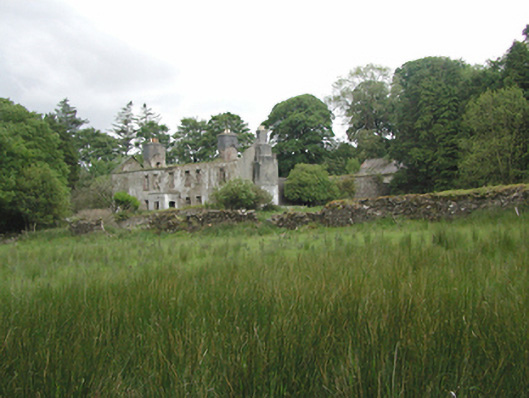
Ballinascorney House is a 19th-century country estate located in the townland of Ballinascorney Upper, on the eastern slopes of the Dublin Mountains in rural South Dublin, Ireland. Constructed circa 1800, the house is a two-storey, five-bay structure with a projecting porch, built from rubble stone. It is listed on the National Inventory of Architectural Heritage (Reference 11224004) as a fine example of early 19th-century domestic architecture. The name 'Ballinascorney' derives from the Irish Baile na Scornaí, meaning 'townland of the gorge' or 'townland of the sheep-path', reflecting the rugged terrain that characterises this corner of South Dublin.
The Talbot Estate
The estate was historically part of the vast landholdings of the Talbot family, who played a significant role in the development of the Dublin region. The Talbots held influential positions in the Barony of Uppercross, of which Ballinascorney forms a part. Throughout the 19th century, the house served as a country retreat for wealthy Dublin families, offering views across the surrounding countryside from its elevated position in the Dublin Mountains. The townland of Ballinascorney Upper, where the house stands, spans an area of 426 acres according to historical Ordnance Survey records.
Architectural Description
Ballinascorney House embodies the elegant simplicity favoured by the Irish gentry of the late Georgian period. The five-bay facade presents a symmetrical frontage, with a central projecting porch that serves as the principal entrance. The walls are of rubble stone construction — locally sourced granite and limestone typical of the Dublin Mountains — and have withstood over two centuries of exposure to the mountain climate. The building's proportions and detailing place it firmly within the tradition of substantial Irish country houses that dotted the rural hinterland of Dublin during the 18th and 19th centuries.
Decline in the 20th Century
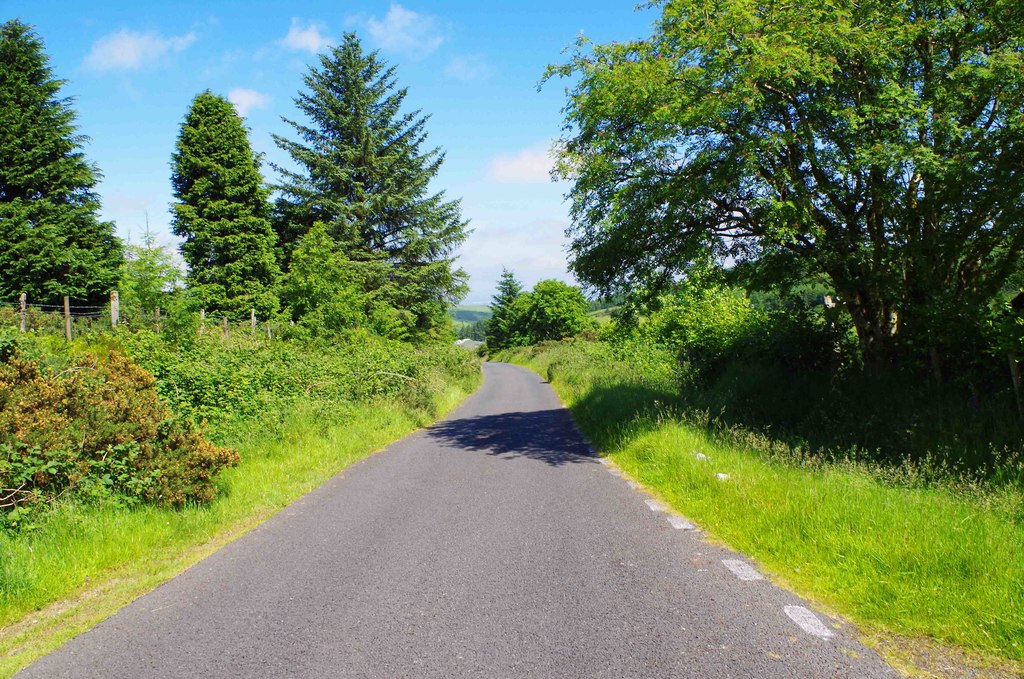
As the 20th century dawned, the fortunes of many grand Irish country houses began to wane, and Ballinascorney House was no exception. The changing social and economic landscape of Ireland — from the Land Acts through independence and beyond — led to the gradual decline of the estate system. Despite this, the house remained inhabited well into the mid-20th century, preserving its character and the fabric of its original construction. The steep gradients of the surrounding roads, as evidenced by the L7642, highlight the challenging terrain that has both preserved the area's rural character and limited its development.
Current State
Today, Ballinascorney House stands in a state of dignified repose. Its weathered walls and empty windows tell stories of the families who lived within its rooms across two centuries — from the Georgian gentry to the farmers and rural families of the 20th century. The surrounding landscape, with its ancient field patterns and winding lanes, continues to echo the history of this corner of South Dublin. While the future of the house remains uncertain, its importance as a piece of architectural and social history is undeniable, and its listing on the National Inventory of Architectural Heritage ensures its significance is formally recognised.